Wednesday, 29 April 2015

Assessment is ongoing

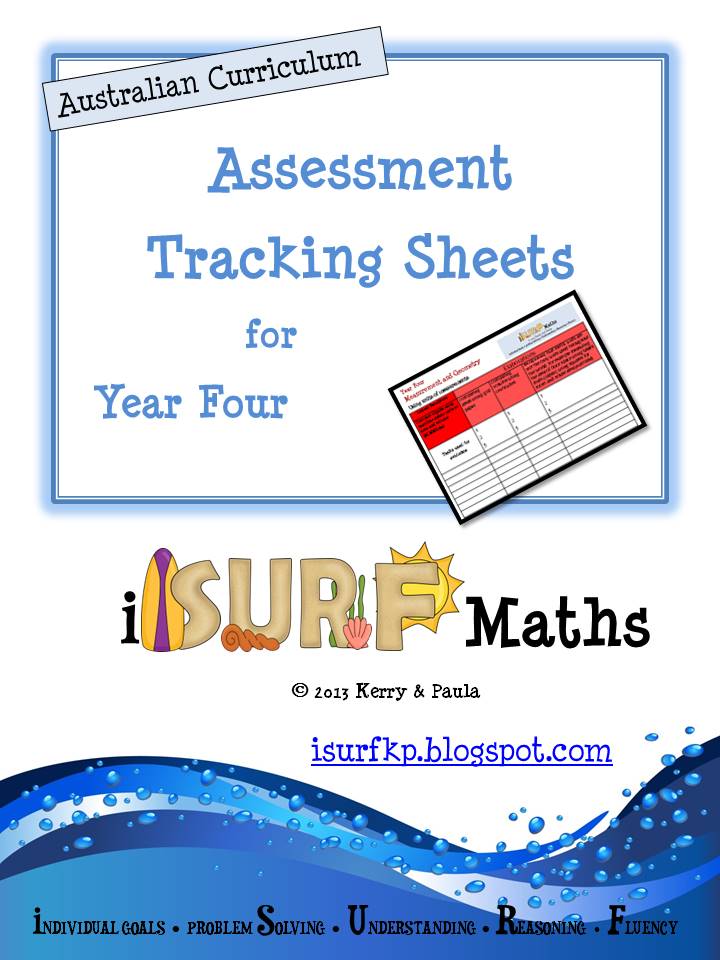
Assessment is ongoing and these packs will help you to keep track of what each of your students know. 

For our Aussie followers these packs are for you. 

This will assist to see who needs tasks in certain areas and provide proof for reporting and talking to parents. 

Our store iSURF Maths has these packs or bundles to help you - if you have students performing outside the age appropriate year level, the bundles are for you. 

Click on the images or links below for more detail.


Happy assesssing


Sunday, 26 April 2015

Some pinterest links....

These pins are among some of my favourite - click on the image to go to the original source. 

Spring Math Dice Games FREE
   
Great way to store and use dice without them rolling everywhere. 

Controlled dice - no more flying around the room. I tried buying these, very expensive, going to make instead! works great easy to do!

A game to play with your grade and they can teach their families. 

Tenzi is the Ultimate Family Night Game because it's so much fun and GREAT for all ages. Change the rules and make it a math game. 

Roll and add collections. 

Race to Fill the Cup! Counting Game for Preschoolers

Roll and add by rounding money.

This game is VERY simple but powerful for the kids because it helps them to make those connections that 5 pennies = 1 nickel, 2 nickels = 1 dime, etc...

Happy pinterest-ing

Wednesday, 22 April 2015

Graphing for young learners


Introducing our newest pack 

In the early years we expect our students to be able to answer yes or no questions and graph information. This pack will help with this – just print and go. (26 pages)

This pack is aimed at Foundation Level in Australia and Grade One in USA.

Graphs include spinners and asking questions for
Yes/no
Cat or dog
Walk or car
Choose one of three colours/colors
Do you have a brother?
Do you have a sister?
Do you like cake?
Which fruit do you like?
Have you travelled using these…

Share the ‘I Can’ chart and display. Refer to it at the start and conclusion of the lesson as a reflection.  Choose the chart for your curriculum.
Model how to complete the graph and provide the language needed to obtain the answers from 10 children within the grade.
As students organize, represent and interpret data up to three categories they need to ask questions about the total number within each group.
They need to be asked and have modelled questions to work out how many more or less in one category more than another.
The students can complete the print and go graphs individually or with a partner.

There is a section for Australian spelling and a section for USA spelling.

Saturday, 18 April 2015

Using dice

This group have been working on adding 1, 2, 3, 4, 5 and 10 to a collection rolled on a dice. 

They are a group that need to estimate, work out and share. Their oral language is being enhanced by talking and comparing. 

We have a student who does not speak very clearly and here he is being the teacher of the group, checking, guiding and supporting this group as well as checking them and giving them feedback. 

Rolling a simple dice - has so many outcomes attached.


Thursday, 16 April 2015

Mix and Match Cards

Hello everyone!
For all of our followers in Victoria - welcome back to Term 2!
To everyone else, we hope you are enjoying wherever you are in your school year and are making great progress with your students!
 
This week we are adding a set of 0 - 20 Mix and Match Cards to our collection...
 
0-20 Mix and Match Cards
 
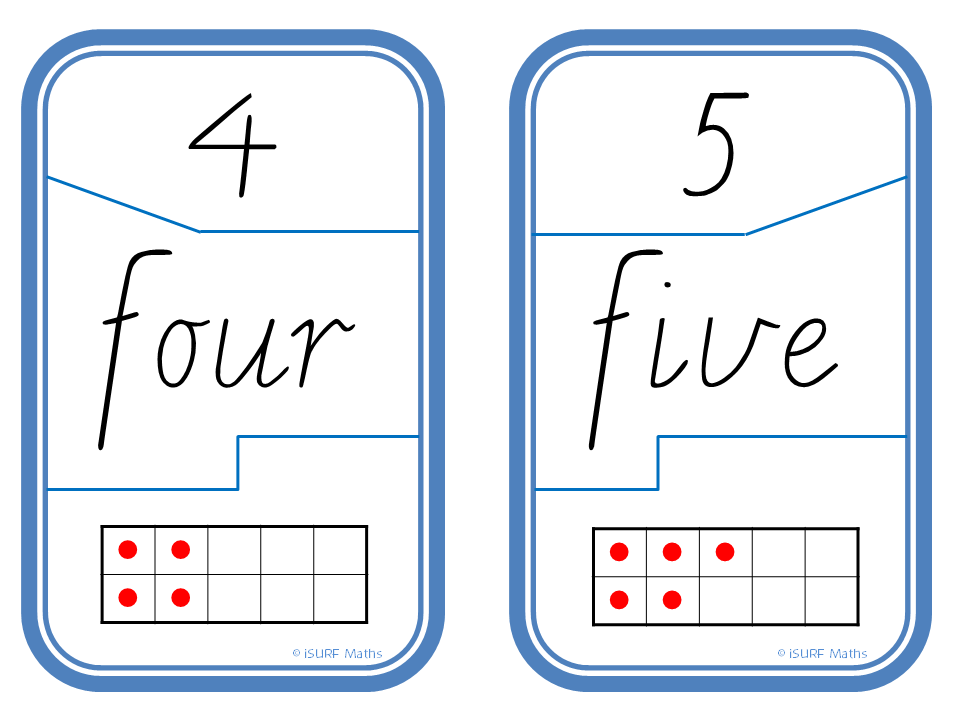
Mix and Match Cards are designed to help students consolidate their understanding of number names, numerals and quantities (including zero), as well as subitise small collections of objects.
 
Mix and Match cards (2x sets included)
Set 1 includes: numerals, number names and 10’s frames (great for number recognition and developing subitising)
Set 2 includes: cards as above – however, 10’s frames are replaced by animal pictures to further develop subitising with random items.
https://www.teacherspayteachers.com/Product/0-20-Mix-and-Match-Cards-1814081  https://www.teacherspayteachers.com/Product/0-20-Mix-and-Match-Cards-1814081
 
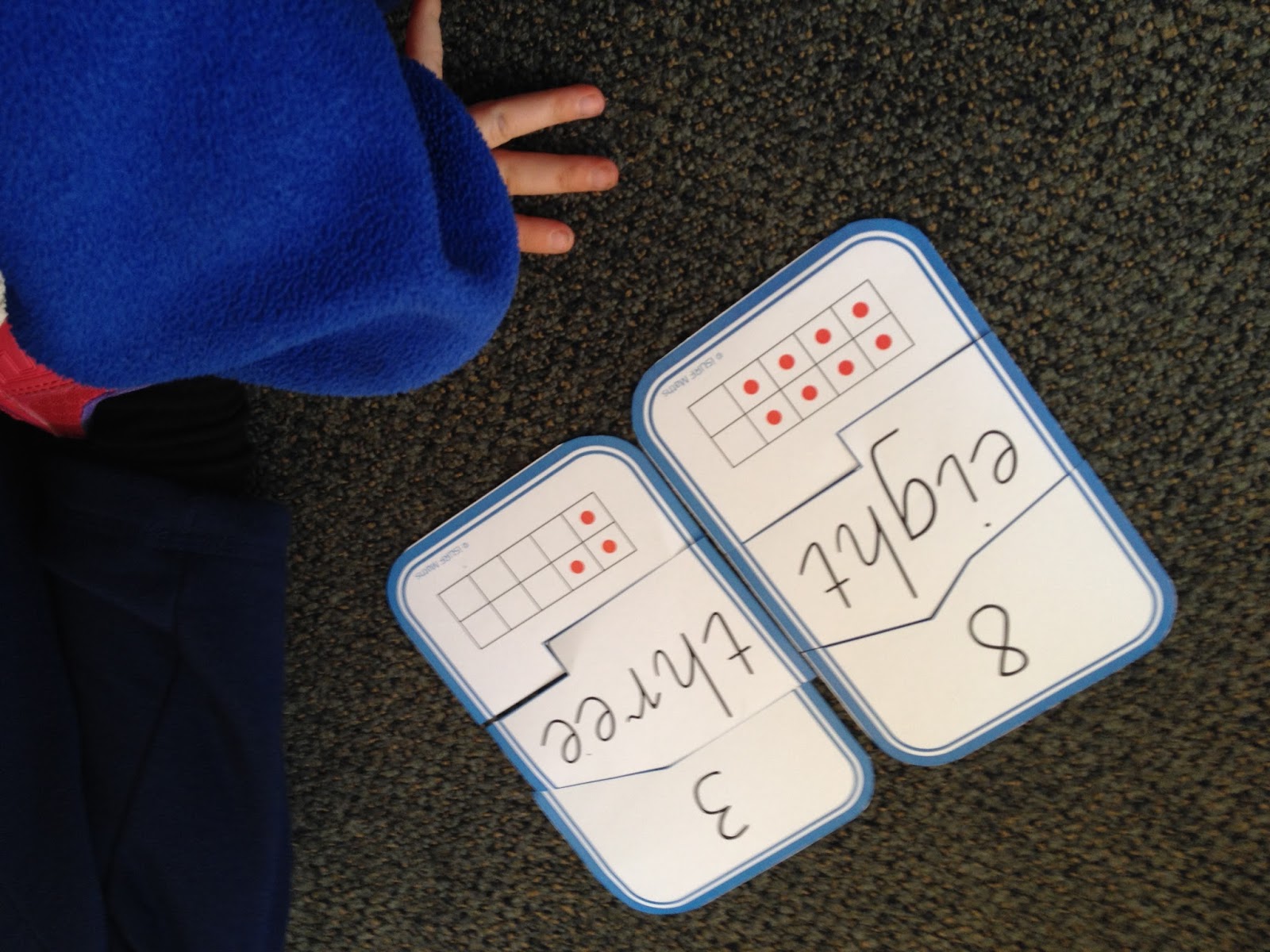
Cards are designed to be printed in colour (choose the most appropriate set for your students), laminated and then cut into jigsaw pieces.
 
To introduce the use of Mix and Match Cards - model and match cards with small groups until students understand how the task works and how to check if they are correct (the jigsaw pieces should fit together perfectly). When the numbers move beyond 10, the pictures and 10’s frames can also assist students to develop strategies for addition.
 
    https://www.teacherspayteachers.com/Product/0-20-Mix-and-Match-Cards-1814081   https://www.teacherspayteachers.com/Product/0-20-Mix-and-Match-Cards-1814081
Ideas for using the Mix and Match cards…
  • Students can work individually or in a small group to match the numerals, number names and quantities. Begin with student’s point of need and increase the number of cards from there. For example, some students may start with the cards 0 – 5, where as other students may be ready for 0 – 10 or 0 – 20. Alternatively, students may start with only 2 pieces e.g. numerals and number names or number names and 10’s frames.
  • Students can also use the individual components of each card to order numerals, number names and quantities.
Variations…
  • Other ideas for using the Mix and Match Cards are included in the pack.
 
We are always excited to see the progress our younger students start to make at this stage of the year!
 

Wednesday, 25 March 2015

Easter Holidays!

WOW!
First term has really flown by and here we are - it's nearly Easter!
Our students have completed a broad range of mathematical work and are really starting to show off their new skills and thinking.
 
In Australia, our students start school when they are around 5 years of age. Some start with quite alot of knowledge and some with a little.
One of our first jobs (after settling them into the routines of school of course!) is to find out what they know about numbers. Not just their ability to count, but to match collections, recognise and start to write numerals, and subitise a small numer of objects.
To assist us with this, a set of 0 - 20 Mix and Match cards will be added to our stores soon.
Two sets will be included (one with 10's frames and one with animal pictures).


In the meantime, we are going to take a short break over Easter and return at the start of Term 2.
We hope you enjoy this special time with family friends!

HAPPY EASTER!


Sunday, 22 March 2015

Money and giving change

We normally post our new products on a Wednesday - but I needed to tweak this a little, so here it is!


Money - Giving Change (Australian Money) – 58 pages

This pack is aimed at Year 4.

At Year 4 Level our students are required to give change accurately to 5c and know that they can use calculators to check their answers. They investigate the use of foreign currencies and make comparisons to our own currency.

This pack contains

‘I Can’ Charts - Refer to them at the start and at the conclusion of the lesson as a reflection.

Thinkboards for working out change, including rubbings of change given.

What’s my change? 
Each picture of a wallet or bag has an equation to solve. Work with a partner and show how much change is given.  Work them out then check on a calculator. Use play money to place on top to show the change.

Dice tasks.
Roll the dice twice. Record the two amounts and decide which one is larger and subtract the second amount. You can use the bag page – laminate and use dry erase markers to record the equation.
Using play money or the money provided (at the end of the pack) to show how you make the change. Check on a calculator.

What does my change look like?
Copy in colour and use as a learning centre. Cut each card out.
The cards could be used for - Read the Room task and use the recording sheet. Copy and place around the room. The students locate the cards, record the equation needed and write down the answer. Sorting in sequence for the prices listed on each card. The red tag is the price of the item and the note is the money that the students have. They need to work out the change needed.  Students may work out as an algorithm, use coins to work out the amount needed as change or use a calculator.

Other currencies - To assist in investigating other currencies the tasks include – a template to record the currencies of five countries. Rubbings of foreign coins. Ask students to bring in coins from family travels and make rubbings of them. Venn Diagram to compare our currency to one other foreign currency. Compare prices task. Model this task using internet research and then let students investigate the process for objects. Change needed? Use the information gathered in previous task, then add the note or coins needed to buy the item and in the final column record the change given.

Assessment - the template is for recording the learning of each of your students. There is space to record your comments too!


Friday, 20 March 2015

2D and 3D shapes

We have been revising and working on 2D and 3D shapes.

I work in a Year 3/4 and many of our students needed to be extended and this pack was designed for Year 5 and 6. 

This catered for our large group of students who needed to be challenged. 


We used our pack for 3D objects to guide our work